Mostrando entradas con la etiqueta Casa Italia. Mostrar todas las entradas

lunes, 2 de julio de 2012

Exposición / Exhibition

Las ITALIAS de Caracas


Desde los 30s, oleadas de inmigrantes provenientes de todas las regiones de Italia, llegaron a los puertos venezolanos en los grandes barcos italianos de la época. Algunas veces para regresar a Italia luego de un tiempo y reanudar allí sus vidas interrumpidas por la guerra y la pobreza, pero la mayoría de las veces para quedarse en Venezuela para siempre.
Estos son los "Especialistas". Una multitud valerosa de trabajadores que vinieron a reconstruir sus vidas y que, haciéndolo, lo primero que reconstruyeron fue su propia ciudad fragmentada. Fugitivos de los problemas de sus países, llegaron para llenar el valle de Caracas y sus colinas de los fragmentos arquitectónicos y urbanos de sus recuerdos. El momento constructivo que el país vivía debido al boom petrolero, encontró en estos refinados arquitectos, experimentados ingenieros, sabios constructores, poéticos artistas y magníficos artesanos italianos la herramienta más eficiente para la transformación del entorno, aprendiendo de ellos, confiando en ellos... y también volviéndose un poco ellos.
El capítulo italiano de la herencia moderna de Caracas, en sus divinas hibridizaciones con la cultura local, cambió la psicología ambiental de la ciudad moderna, revelándole a la gente culturalmente el potencial escénico del lugar, la especificidad de los sitios, y enseñándolos a hacer una arquitectura más urbana. Sin sus Italias, el ambiente vital de Caracas nunca será el mismo.

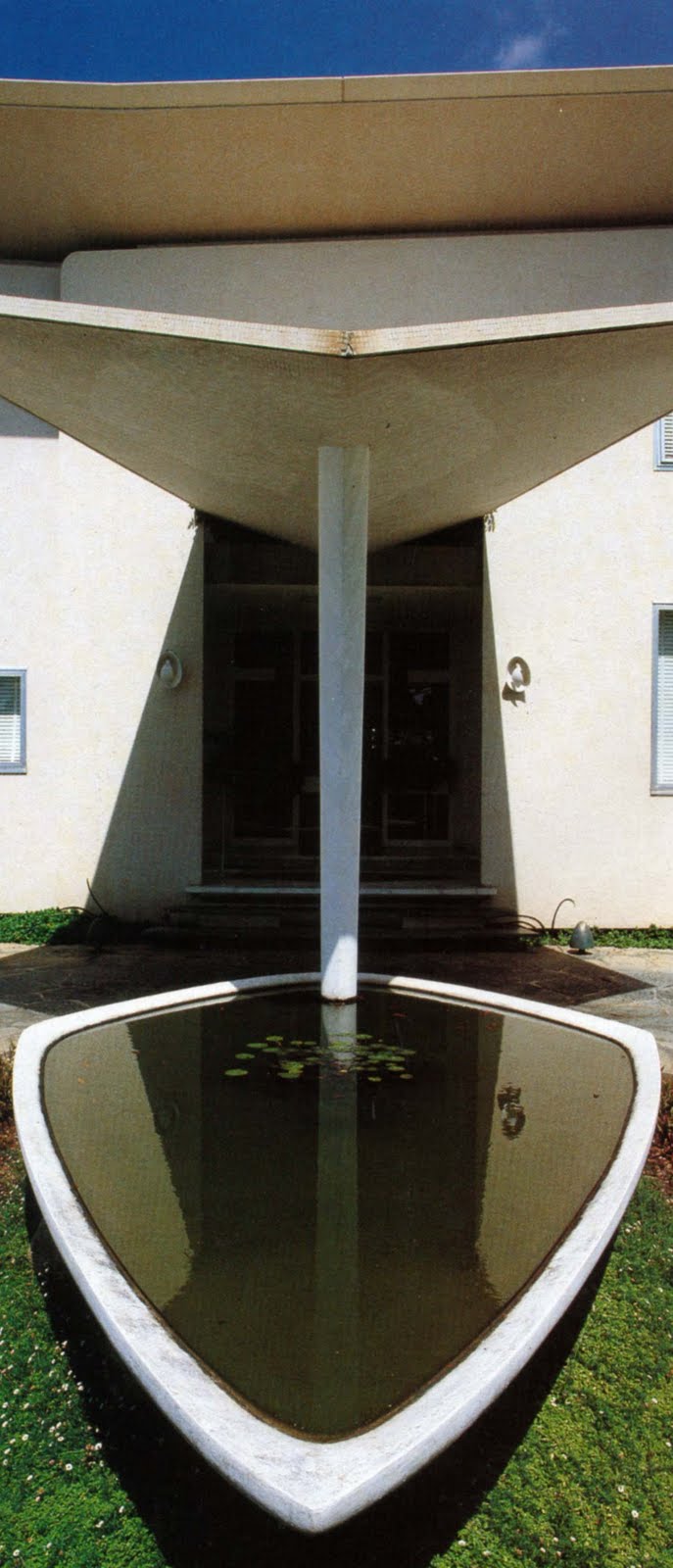
 Villa Monzeglio, Colinas de Bello Monte, Caracas. Antonio Montini, 1953.

Las ITALIAS de Caracas (f. EL NACIONAL)

From the 1930s, waves of immigrants coming from all the regions of Italy arrived to the Venezuelan harbors in the great Italian liners of the time. Sometimes to return to Italy after a while and resume there their lives interrupted by war and poverty, but most of the times to stay in Venezuela forever.
These are the "Specialists".  A multitude of brave workers that came to reconstruct their lives and that, in doing so, the first thing they reconstructed was their own fragmented city. Fugitive of the problems of their countries, they came to fill the valley and the hills of Caracas with the architectural and urban fragments of their memories. The building moment that the country was living due to the oil boom, found in these fine architects, experienced engineers, wise builders, poetic artists and magnificent  Italian artisans the most efficient tool for the transformation of the environment, learning from them, trusting them... and also slightly becoming them.
The Italian chapter of Caracas Modern Heritage, in its divine hibridizations with local culture, changed the environmental psychology of the modern city, culturally revealing to the people the place's scenic potential, the specificity of sites, and teaching them to make urban architecture. Without its Italias, the living environment of Caracas would never be the same.
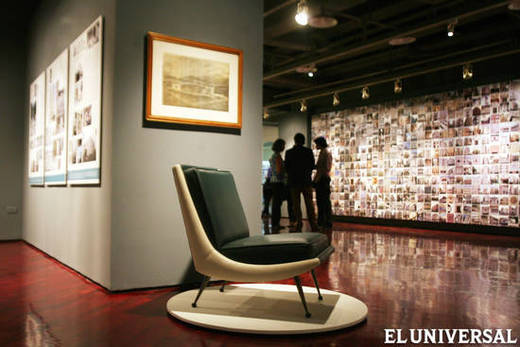
Las ITALIAS de Caracas (f. EL UNIVERSAL)

Curaduría y producción / Curatorship and Production: DoCoMoMo Venezuela
Inauguración: Julio 4, 2012
Hora: 7:00 pm
Lugar: Sala TAC, Trasnocho Cultural, Paseo Las Mercedes. Caracas, Venezuela.
Clausura: Julio 29, 2012

Opening: July 4, 2012
Time: 7:00 pm
Place: Sala TAC, Trasnocho Cultural, Paseo Las Mercedes. Caracas, Venezuela.
Ended: July 29, 2012

 Los paneles / The panels  (f. Tal Cual digital)

Links
DoCoMoMo ITALIA
DoCoMoMo Ibérico
Tráfico Visual
Caracas Shots
Arte en la red 
César Miguel Rondón
el-nacional.com 
El Universal
Tal Cual 

martes, 19 de octubre de 2010

HERITAGE AT RISK

The Church of N.S. de Pompei

Church of N.S. de Pompei, Domenico Filippone. Caracas, 1967-69. Main facade.

The Church of Nuestra Señora de Pompei is located in the Calle San Miguel of urbanización Alta Florida, in the Municipio Libertador. It was built between 1967 and 1969 by the Italian architect Domenico Filippone, author of the famous Casa Italia (1955) in La Candelaria, with the patronage of Venezuela´s Italian community. Its relevant aesthetical values are an exemplary showcase of Caracas 1960s modern architectural language. Therefore, it was included in the I Censo del Patrimonio Cultural Venezolano, done by the Instituto del Patrimonio Cultural.

Church of N.S. de Pompei, Caracas, 1967-69. Interior.

Currently some alarming remodeling works are being practiced to the church. These consist in replacing the main facade´s original sculptural enclosure made in plaster with a few coarse clay panels. The disrespectful substitution alters the church´s concept and its interior architecture, and also destroys the effect of natural light and the ventilation entering through the facade. Part of the sculptural modules have been demolished already to insert red clay panels.

According to the information provided by the parrish, the works are being done "in order to provide greater security and to control the entry of doves". This, clearly, does not justify the damage done, since the original closure could have been temporarily removed to install a protection in the middle of the wall, not affecting the aesthetic value of the patrimonial building.

Iglesia de N.S. de Pompei. Caracas, 1967-69. Dismantled panels.

We want to call on all the architectural community, the residents of the Alta Florida and especially the Instituto del Patrimonio Cultural (to which this same message has been sent in a letter written by worried citizens) in order to find a solution that would achieve the sought safety and comfort without altering the conditions and the original spatial concept of the architecture. This 1960s modern temple has been designated a Good of Cultural Interest and therefore any attempt to change it must by law be reported, monitored and approved (or not) by the Instituto. We must stop and reverse this harmful intervention to this modern heritage… now endangered.

Versión castellana aquí

PATRIMONIO EN PELIGRO

La Iglesia Nuestra Señora de Pompei

Iglesia de N.S. de Pompei, Domenico Filippone. Caracas, 1967-69. Fachada principal.

La Iglesia Nuestra Señora de Pompei se encuentra ubicada en la calle San Miguel de la urbanización Alta Florida, en el Municipio Libertador. Fue construida entre 1967 y 1969 por el arquitecto italiano Domenico Filippone, autor de la célebre Casa Italia (1955) en La Candelaria, gracias a los aportes de colonia italiana en Venezuela. Sus relevantes valores estéticos son una muestra ejemplar del lenguaje de la arquitectura moderna caraqueña de los años sesenta. Gracias a ello fue incluida en I Censo del Patrimonio Cultural Venezolano, llevado a cabo por el Instituto del Patrimonio Cultural.

Iglesia de N.S. de Pompei, Interior.

Actualmente se le están realizando unas alarmantes obras de remodelación. Estas consisten en la sustitución del cerramiento escultórico original hecho en yeso calado de la fachada principal por unos burdos tabelones de arcilla. Esta irrespetuosa sustitución altera el concepto de la iglesia y de su arquitectura interior, y además destruye el efecto de la luz natural y la circulación de la ventilación por los calados. Parte de los módulos escultóricos han sido demolidos para insertar tabiques de bloques de arcilla.

Según información proporcionada por la parroquia, la obra se viene ejecutando "con el objeto de proporcionar mayor seguridad y de controlar el ingreso de palomas". Esto, evidentemente, no justifica el daño realizado, puesto que el cerramiento original pudo ser retirado temporalmente a fin de instalar en el medio una reja de protección, de manera de no afectar los valores estéticos del bien patrimonial.

Iglesia de N.S. de Pompei, Alteración inconsulta de la fachada.

Queremos hacer un llamado a toda la comunidad arquitectónica, a los vecinos de la Alta Florida y en especial al Instituto del Parimonio Cultural a fin de buscar una solución que permita lograr seguridad y el confort buscados sin alterar las condiciones y el concepto original espacial de la edificación. Este templo moderno 1960s cuenta con una declaratoria de Bien de Interés Cultural, por lo cual todo intento de modificación debe por ley ser notificado, supervisado y aprobado (o no) por dicho instituto. Es necesario detener y revertir esta dañina intervención en este patrimonio moderno… por ahora en peligro.

English version here